Scientists at TSC SB RAS synthesized a highly efficient porous heating element from low-cost natural minerals
Using self-propagating high-temperature synthesis (SHS) and inexpensive materials – ilmenite ore and quartz sand – the researchers produced a porous metal-ceramic composite that conducts electricity and can operate at temperatures up to 800°C. The material could find use in heating elements for a wide range of heating devices. The results of this study have been published in Journal of Alloys and Compounds .
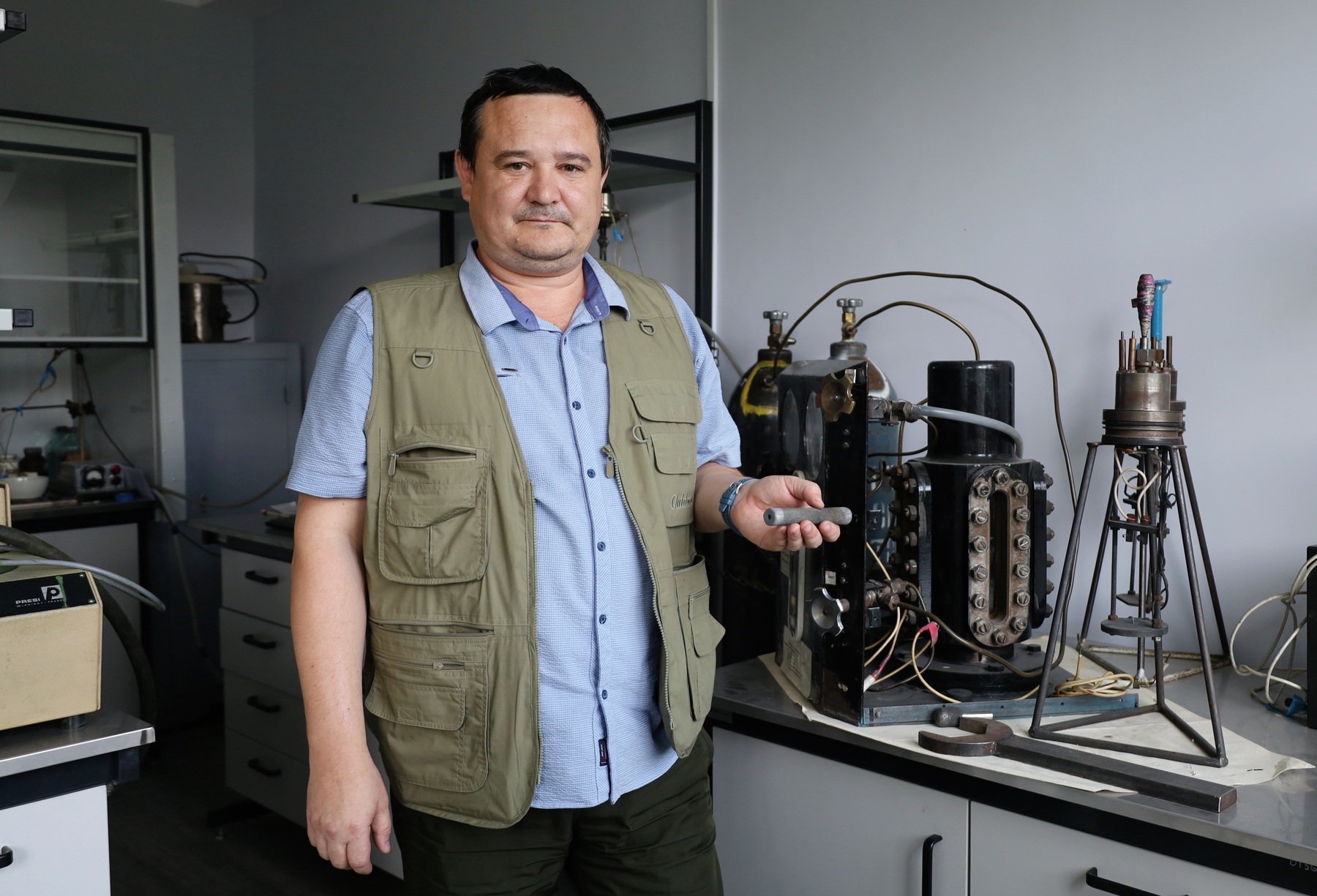
– Our team already had a solid background in producing porous filters and burners by means of self-propagating high-temperature synthesis when we noticed that some materials exhibited good electrical conductivity. That’s how the idea of making a heating element came about. However, many existing heaters are made from expensive high-purity metal powders, which ultimately drives up production costs. An efficient method for producing inexpensive porous materials is what we were looking for. The goal was to combine readily available feedstocks – ilmenite and quartz sand with the addition of carbon to improve electrical conductivity, – said Ramil Gabbasov, Ph.D. in Engineering Science, research fellow at the Laboratory of Technological Combustion of TSC SB RAS.
The porous framework is based on aluminum oxide and acts as a non-conductive skeleton. Inside, a uniformly distributed titanium-iron silicide phase provides electrical conductivity. The composite was synthesized at temperatures around 1850–1880°C. First, the sample was tucked into a “blanket” inside a specialized chemical furnace, containing the same reactant composition, and when ignited, both components burned away together, ensuring uniform heating and, consequently, homogeneous synthesis throughout the material.
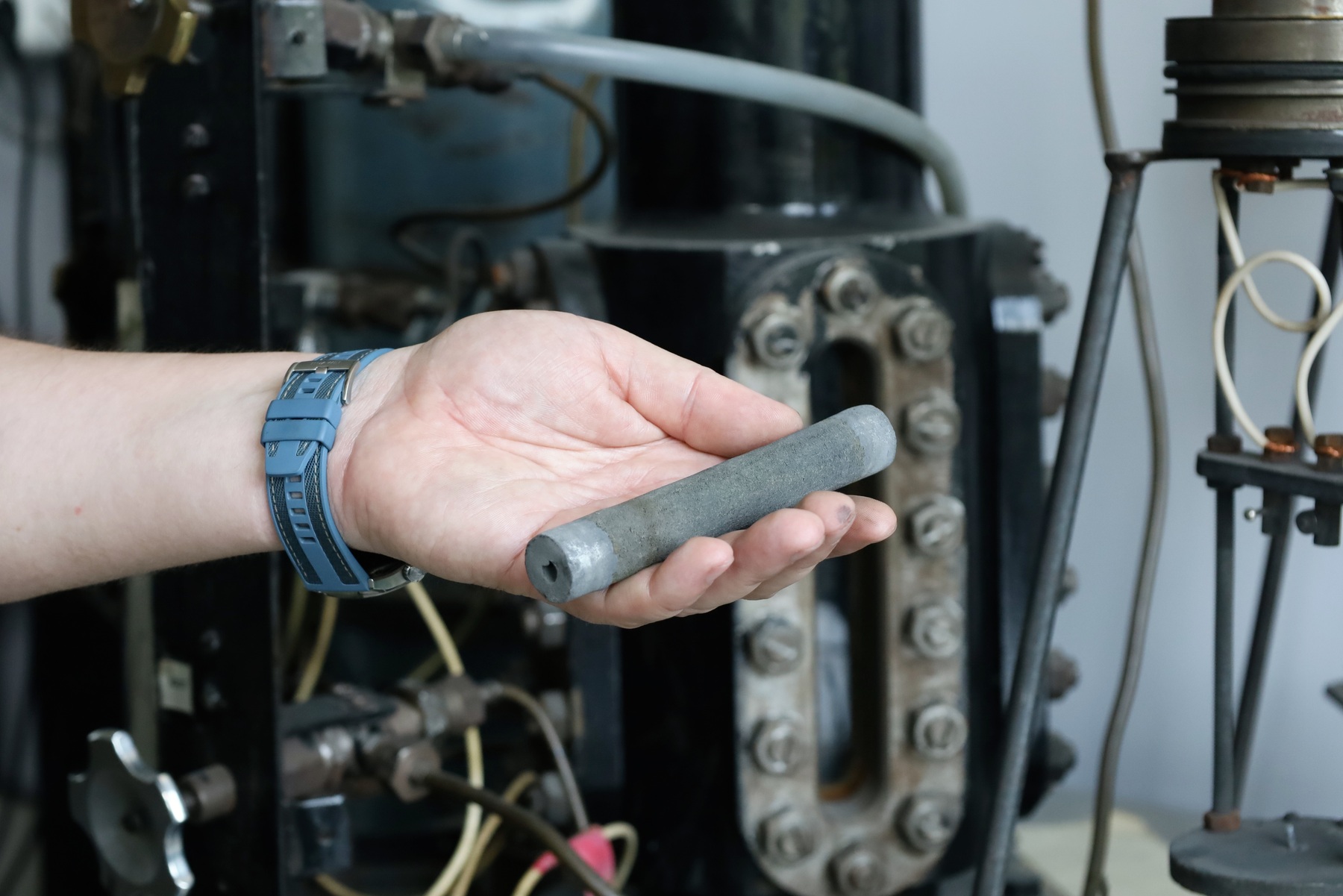
By adjusting the mixture composition, the researchers were able to control the electrical resistivity of the composite, thereby varying its strength. They found an optimal silicon content of about 57 percent by mass, which yielded a homogeneous material with doubled mechanical strength and stable electrical properties at high temperatures. These findings showed a good agreement with mathematical calculations.
Adding 0.5–1 percent carbon worked miracles for the microstructure, improving conductivity and strengthening the material even more. Carbon helped prevent the intermetallic particles from coalescing into large aggregates during combustion. Titanium carbide particles formed in the process were the extra crystallization centers that suppressed the coalescence. The size of conductive silicides (TiFeSi2) decreases nearly threefold, from 4.1 to 1.3 μm, forming a percolation network.
– Imagine two large particles connected by a single contact, compared with many smaller particles forming numerous interparticle contacts. As the particle size decreases, the number of contacts increases. The smaller the particles, the more contacts are formed, creating pathways for current flow while also enhancing the composite’s strength up to 23.4 MPa, – explained Ramil.
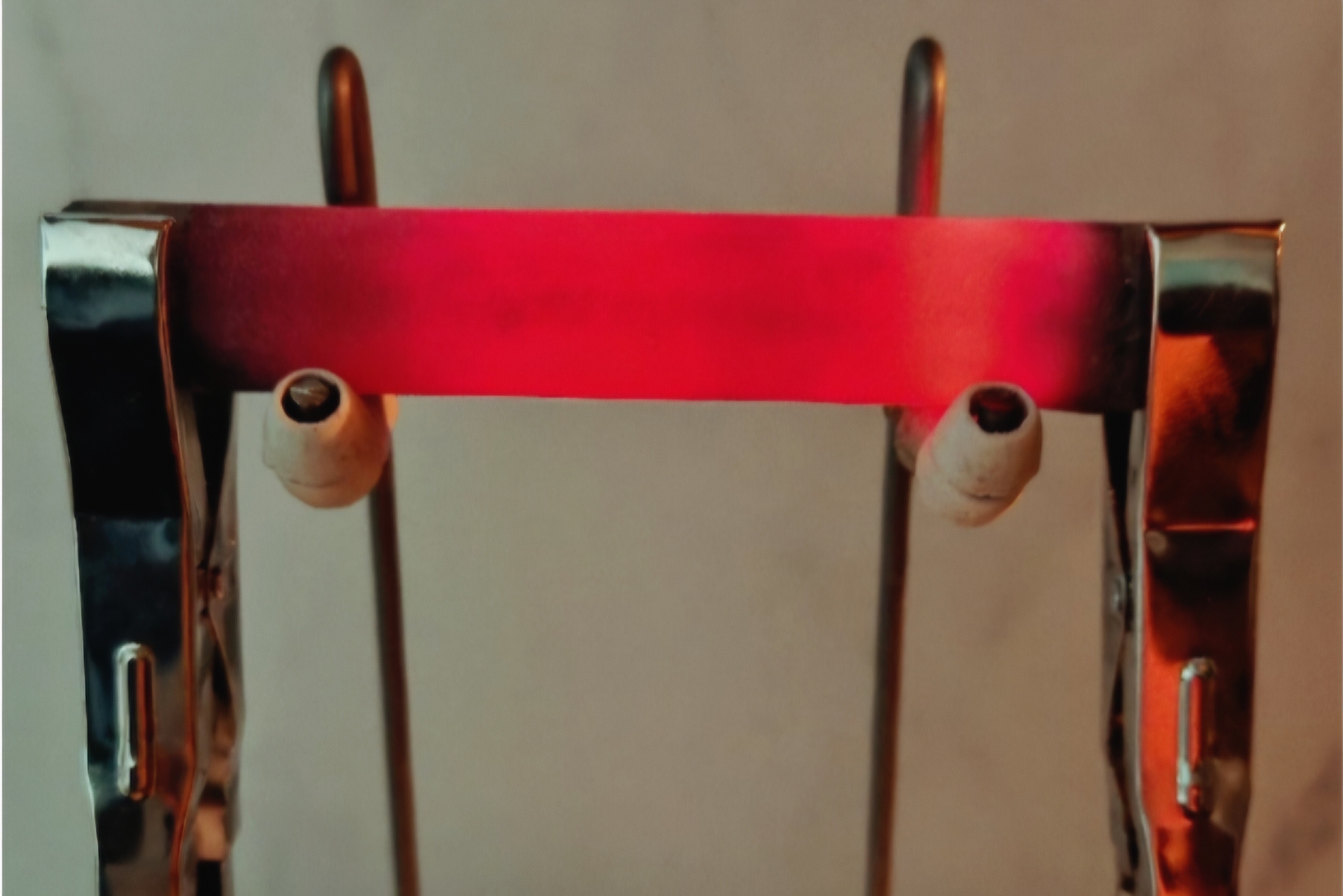
Tests showed that the new porous composites maintain stable operation at 800°C. They could be used to manufacture household heaters, ventilation and filtration systems, and heating devices for industrial processes. The scientists aim to raise the operating temperature from 800°C to 1000–1200°C and investigate the possibility of applying catalysts to accelerate chemical reactions.
© TSC SB RAS Press Service

